
Top Signs You Need Garage Door Service – Don’t Ignore These
A garage door that takes three seconds longer to open than it did six months ago isn’t aging gracefully. It’s telling you the spring tension is off, and a fully failed spring is typically 2 to 6 weeks away from that symptom. Garage doors are mechanical systems under constant load, which means they signal problems loudly and specifically. The trick is knowing what each sound, movement, and visual cue actually means, so you stop dismissing warning signs as quirks. If you’d rather not decode it yourself, call (855) 337-1768 and we’ll take a look.
What Do the Noises Coming From Your Garage Door Actually Mean?
Every distinct sound points to a specific component. Here’s the translation we walk Coon Rapids homeowners through every week.
- Grinding: Usually metal-on-metal contact at the opener’s rail or a dry, worn torsion assembly. It often starts quiet and gets louder within days. Grinding doesn’t fix itself, and continued use accelerates wear on the opener motor.
- Squealing: Rollers or hinges that have lost lubrication, or nylon rollers that have worn through to the bearing. This is often the cheapest fix on the list, but only when caught early. A squeal ignored for months can turn into a seized roller that strains the opener.
- Popping: A single loud pop followed by the door dropping slightly is often a torsion spring letting go. Stop using the door and call for service. This is the one sound that warrants abandoning the door until a technician inspects it.
- Rattling: Loose bolts, a worn hinge, or a door panel that’s separated from its stiles. If the rattle gets worse when the door is halfway up, chances are it’s in the hardware, not the panels.
We’ve seen all four in Coon Rapids garages, and the pattern is consistent: homeowners wait for a sound to become unbearable before calling. The earlier a noise is diagnosed, the smaller the repair.
What Do the Safe Homeowner Tests Reveal?
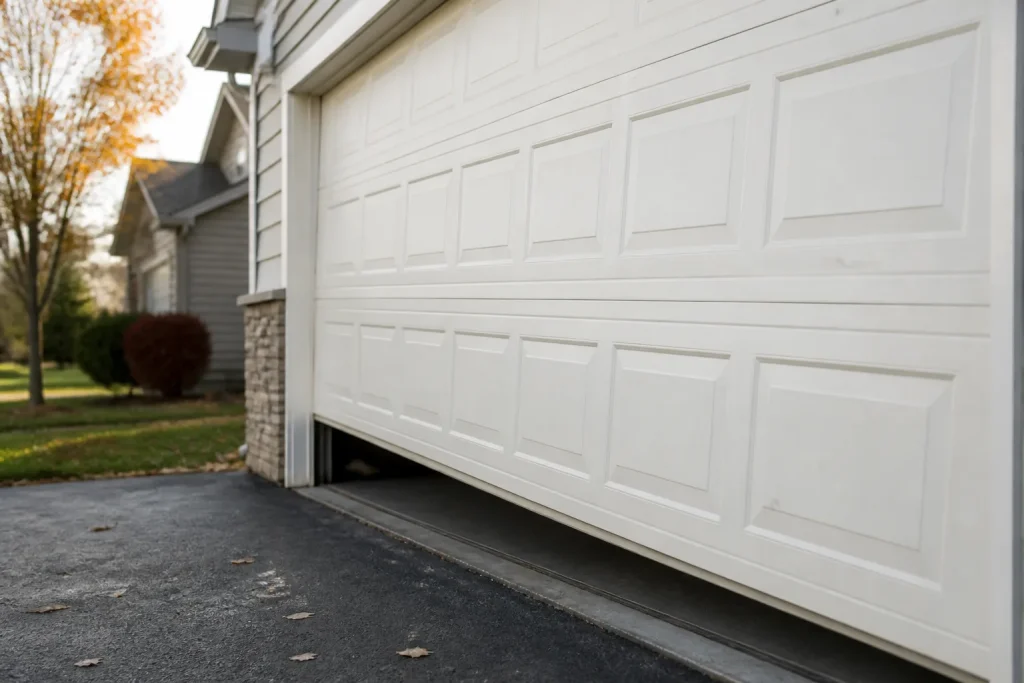
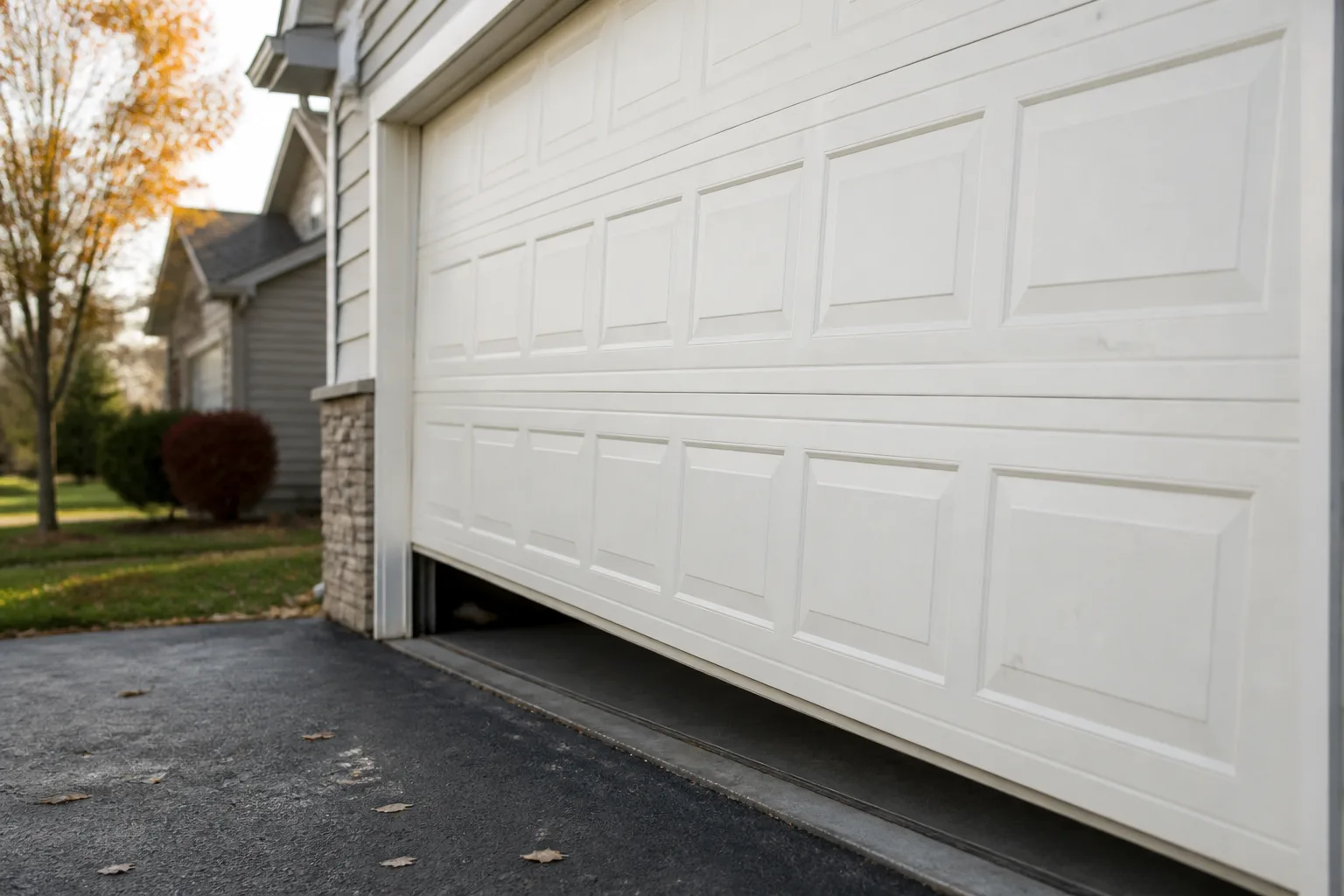
You don’t need to touch a spring or a cable to know something’s wrong. Two simple tests tell you a lot. The balance test: disconnect the opener (pull the release handle with the door closed, then raise the door about halfway), and let go. A balanced door should hold in place. If it drops or rises on its own, the springs are out of adjustment or failing, and the door is bearing its own weight. The gap test: with the door closed, look along the bottom seal and each side. Gaps wider than the seal at any corner suggest a twisted track, a bent panel, or a cable that has slipped off its drum. Both tests are safe because they involve no tools and no pressure on the moving parts under tension. What we ask you not to do is attempt to adjust or remove a torsion spring yourself; that’s the repair that sends people to the emergency room. If a test raises a red flag, that’s a conversation for a technician, not a YouTube tutorial.
Why Is Slow Operation More Urgent Than It Looks?
A door that opens slower than it used to is usually a door whose opener is compensating for hardware failure. That’s the problem. When a spring weakens, the opener’s motor picks up the extra weight. When a roller or hinge stiffens, the motor forces through the resistance. It keeps working, so it feels like nothing is wrong. But the opener wasn’t designed to lift the door weight on its own, and it’s now doing it every time you drive home. We see this constantly in Coon Rapids: a homeowner notices the door is sluggish, replaces the opener, and the new opener fails too, because the actual problem was the spring all along. Slow operation is a warning that a component is degrading, and it usually costs less to fix that component than to replace the opener it’s been quietly wearing out. If your door is slower than it was last year, have the hardware checked before you buy a new motor.
What Do Visual Cues on the Door Itself Tell You?
Look at the door surface and the frame with fresh eyes. Minnesota winters are hard on garage doors: freeze-thaw cycles warp the frame, and a minor panel dent can become a crack with a season of shifting. Watch for these:
- Dents that spread: A small dent where the door meets the driveway is cosmetic. A crack radiating from a dent is structural, and a cracked panel can fail under load.
- Bent or twisted panels: If one panel is visibly out of line with its neighbor, the door is likely binding somewhere along the track.
- Rust at the bottom edge: Common on steel doors in Coon Rapids, and it can eat through the galvanized coating over a winter or two. Rust at the hinge points is usually just surface, but rust along the panel seam will shortens the door’s life.
- A frame that looks off-square: If the gap between the door and the frame is only wider on one side, the track is out of alignment.
- Sagging top panels: A sagging top section usually means the torsion system is failing, and the door’s weight is no longer being distributed correctly.
Any of these is worth scheduling, especially going into winter. The brands we work on most here, Clopay and Amarr steel doors, hold up well when the hardware is sound, but worn hardware will shorten even a good door’s life.
Which Signs Mean Stop, and Which Mean Schedule?
Some problems are a “we’ll be out this week” call. Others are a “stop using the door” call. Here’s how we separate them.
Stop using the door immediately:
- A loud pop followed by the door refusing to rise, or any door that drops suddenly.
- A cable that has come off its drum, which is visible as a slack or looped cable at the top corner of the door.
- Any sign that a door is falling, or that a spring is visibly broken (a clean gap in the coil is the giveaway on a torsioned spring).
- Doors that have come off the track and won’t close without being forced.
Schedule service soon:
- Grinding or squealing that’s new.
- A door that’s slower than it used to be.
- Visual signs of wear on the rollers, hinges, or frame.
- A reversing sensor that sometimes stops the door on the way down.
If you’re not sure which bucket you’re in, err on the side of calling. Diagnosing a failing component the same day is almost always cheaper than replacing a door that’s been used hard with a failing component.
When to Call a Pro
Two rules cover most of it. First, anything involving a spring or a cable means a call, full stop. Those components store huge amounts of tension, and they don’t just uncoil politely. Second, any time you’re not confident about what the symptom means, a quick diagnosis beats a weekend of guessing. We work on your brand, whether it’s a Genie opener on a builder-grade door or a Wayne Dalton unit that’s been quietly running for years. That said, we’re happiest when you call at the first sign rather than the final one. A door that squeaks today often grinds next month, and the repair list gets longer, not shorter. Our technicians have up to 9 years of experience specifically on garage doors, so they can usually tell you what’s wrong in a few minutes.
Related services in Coon Rapids
If you’ve spotted a specific problem, our pages on garage door repair, garage door opener repair, and garage door spring repair cover the details for each fix. You can also start at Garage Door Repair Coon Rapids for the full picture.
What happens when you call
- 1
A real person answersNo phone trees – you reach a local pro.
- 2
You get an upfront price rangeHonest numbers before anyone is dispatched.
- 3
A background-checked tech heads outLicensed & insured, dispatched right away.
- 4
You approve before work beginsNothing starts until you say go.
The Bottom Line
Your garage door is telling you something, and the signs break down into three simple categories: sounds, movement, and visuals. Grinding and squealing point to hardware and rollers. A pop means stop. A door that’s slower than last season means the opener is working harder than it should, which is a warning you shouldn’t sit on. Anything involving a spring or cable gets a call, not a DIY attempt. If you’re in Coon Rapids and need help, Garage Door Repair Coon Rapids offers free estimates. Call (855) 337-1768, and we’ll give you a straight answer on whether it’s a repair or a replacement. We answer 24/7. Fast dispatch from 7am to 7pm, Sunday through Friday.
Frequently Asked Questions
A loud pop followed by a door that won’t rise is the classic sign. You can also look along the torsion tube for a visible gap in the coil. Don’t try to lift the door by hand or adjust the spring yourself. Call (855) 337-1768 for an assessment. We answer 24/7.
Not usually, but it’s more urgent than it feels. A slow door often means the opener is compensating for a failing spring or worn hardware. Schedule service promptly rather than waiting for the failure, and call us for an estimate. Free estimates, and the price is set before work starts.
Briefly, but not indefinitely. Grinding means metal is eating metal, and continued use wears the opener faster than the hardware itself. Note which part of the cycle grinds, then call (855) 337-1768. We answer 24/7.
We work on all eight leading brands: LiftMaster, Chamberlain, Genie, Clopay, Amarr, Wayne Dalton, Craftsman, and Raynor. That covers nearly any opener or door a homeowner is likely to have. For scheduling, call (855) 337-1768. Fast dispatch from 7am to 7pm, Sunday through Friday.
Written by the team at Garage Door Repair Coon Rapids.
Need Garage Door Help?
Call Garage Door Repair Coon Rapids - the local pro we connect you with is licensed and insured, here with fast help in Coon Rapids.
(855) 337-1768